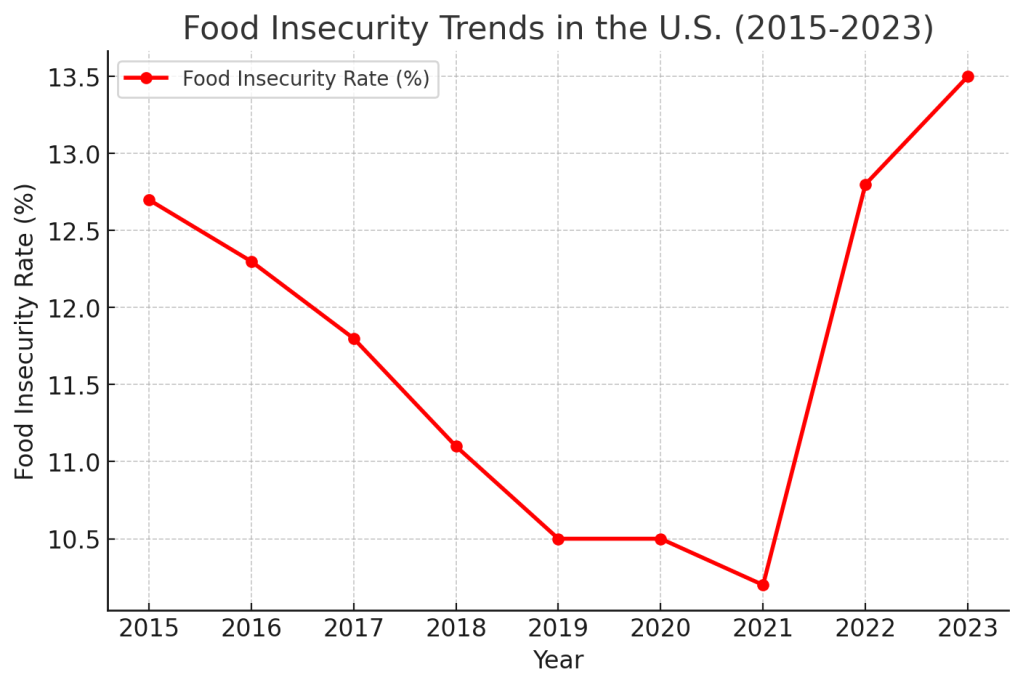
Introduction: The Urgent Need for Innovation Food insecurity is not just about hunger—it’s a complex crisis driven by economic instability, supply chain inefficiencies, and systemic inequities. In the U.S. alone, over 34 million people, including 9 million children, struggle to access consistent, nutritious meals. Despite food surpluses, millions remain underserved due to logistical barriers, policy gaps, and outdated intervention strategies. AI presents an unprecedented opportunity to revolutionize food security efforts by enhancing predictive capabilities, optimizing food distribution, and empowering vulnerable communities.
Step 1: Data-Driven Insights for Proactive Solutions Traditional food security interventions often rely on reactive measures, but AI can shift the paradigm toward prevention by transforming how we understand and anticipate food shortages. Machine learning models can process vast and diverse datasets—such as census reports, grocery purchasing trends, agricultural yields, economic indicators, and nonprofit distribution records—to detect hidden patterns and emerging risks. For example, AI can pinpoint regions where job losses or inflationary pressures may soon lead to increased food insecurity, allowing for early intervention. Predictive models can also assess the impact of climate change on local food production, helping policymakers prepare for disruptions before they occur. Imagine an AI-powered system that alerts food banks and government agencies about upcoming shortages weeks in advance, enabling preemptive resource allocation rather than last-minute crisis response. By equipping decision-makers with actionable insights, AI can help shift food security efforts from emergency relief to sustainable prevention.
Step 2: AI-Optimized Food Distribution and Supply Chains Food waste remains one of the greatest paradoxes in the fight against hunger—millions of pounds of food go to waste while millions of people go hungry. AI-powered logistics platforms can bridge this gap by optimizing supply chain efficiencies. By leveraging smart routing algorithms, AI can match surplus food from restaurants, farms, and grocery stores to nearby food banks or meal programs in real time, minimizing waste and ensuring timely distribution. Additionally, AI-driven inventory management can help food pantries and nonprofit organizations prevent shortages by analyzing demand trends and automating restocking processes.
Step 3: AI-Powered Personalized Assistance for Families in Need For many struggling with food insecurity, accessing available resources is a challenge in itself. AI-driven virtual assistants and chatbots can guide individuals through the process of applying for SNAP benefits, locating nearby food distribution centers, and receiving tailored nutrition advice. These AI-powered tools can be particularly transformative in rural and underserved areas, where access to in-person assistance is limited. Moreover, AI-enhanced case management systems can streamline nonprofit workflows, ensuring that families receive holistic support based on their specific needs and circumstances.
Step 4: Strengthening Agricultural Resilience with AI A sustainable solution to food insecurity must also address agricultural challenges. AI can empower farmers with predictive analytics that optimize crop yields, anticipate weather disruptions, and improve resource efficiency. AI-driven precision agriculture techniques—such as drone-assisted soil analysis, automated irrigation systems, and pest detection algorithms—help maximize food production while minimizing environmental impact. In urban settings, AI can support vertical farming, hydroponics, and local food production initiatives, reducing dependence on fragile global supply chains and increasing community-based food security.
Step 5: AI-Driven Policy Advocacy and Systemic Change While AI can enhance efficiency, it must also be leveraged to drive systemic change. AI-generated reports can provide data-backed insights on hunger trends, food insecurity correlations with housing and wage disparities, and the effectiveness of government assistance programs. Nonprofits, advocacy groups, and policymakers can use this intelligence to push for evidence-based reforms—such as increased funding for food assistance programs, improved wage policies, and expanded community nutrition initiatives. AI can help craft more effective policies by modeling the long-term impact of various intervention strategies, ensuring that solutions are not just short-term fixes but sustainable, structural improvements.
Conclusion: The Future of AI in the Fight Against Hunger The integration of AI in food security efforts is not a futuristic vision—it is happening now, and its potential is immense. From predictive analytics to smart distribution, AI offers a roadmap to shift from crisis response to sustainable, equitable food access. However, AI alone is not the solution—it must be combined with human-centered policies, community engagement, and ethical considerations to create lasting impact. The fight against food insecurity demands innovation, and AI provides the tools to build a future where hunger is not just alleviated, but prevented. The time to act is now—by embracing AI-driven solutions, we can create a world where nutritious food is accessible to all, not just a privilege for some.
 pro social ai
Leave a comment